

Sustainability & material choice
Why sustainable energy needs responsible material choices
Solar energy is one of the clearest symbols of the energy transition. It helps generate cleaner electricity, reduce reliance on fossil fuels and support a more sustainable future. But as the solar industry grows, the conversation is changing.
Sustainability is no longer only about the energy a system produces. It is also about the materials, production processes and supply chains that make that system possible.
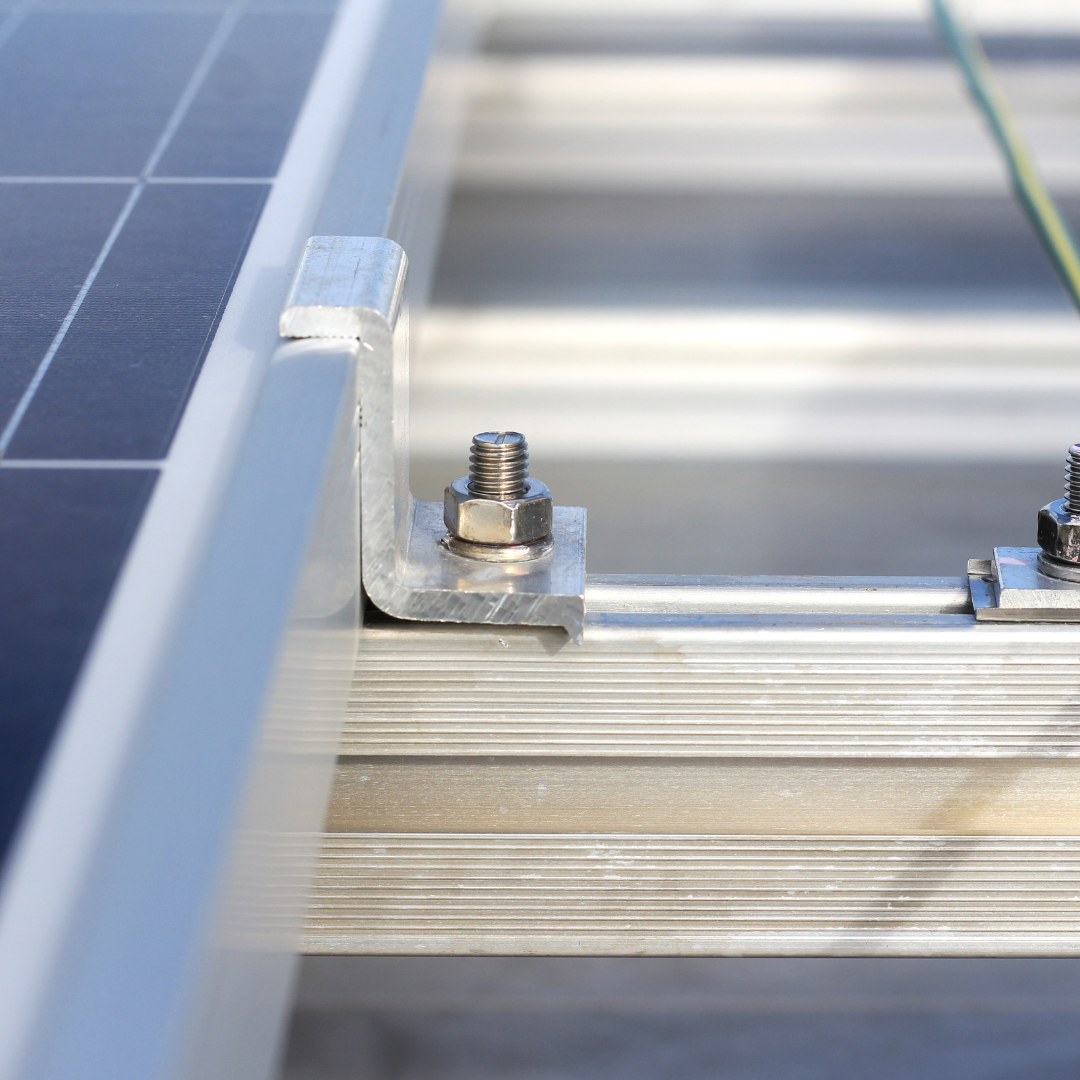
Frames, rails, mounting systems and supporting structures all play a part in the long-term performance of solar infrastructure. They influence durability, installation efficiency, maintenance, recyclability and the overall environmental impact of a project.
That makes material choice a strategic issue. Not just for engineers, but for buyers, sustainability teams and project owners who increasingly need to demonstrate the impact of the choices they make.
Aluminium is logical, but not automatically sustainable
For solar applications, aluminium is a natural fit. It is lightweight, strong, corrosion-resistant, durable and fully recyclable. These properties make it well suited to mounting systems, frames and supporting structures that must perform for many years in demanding outdoor conditions.
However, aluminium should not be treated as automatically sustainable simply because it can be recycled. Its real sustainability value depends on the chain behind it: where the billet comes from, how much recycled content it contains, whether low-carbon production routes are used, how efficiently it is extruded, how far it travels and how consistently it can be reproduced.
This is where responsible material choice becomes more than a technical preference. It becomes part of the credibility of the solar industry itself.

Responsible material choice becomes more than a technical preference. It becomes part of the credibility of the solar industry itself.
Alan Lucas - Regional Business ManagerFrom material performance to measurable impact
At BOAL Extrusion UK, we support this shift through our BLUE aluminium options. BLUE Recycled Content uses billet with at least 65% recycled content, including both pre- and post-consumer scrap. BLUE Low Carbon uses billets produced with renewable energy sources such as solar, wind and hydropower.
With our low-carbon aluminium option, we work with a footprint of 4 kg CO₂e per kilogram of aluminium, helping customers better understand the impact of their material choices.
For the solar industry, this matters. Material choice is no longer only about performance. Customers increasingly need clear data on where aluminium comes from, how it is produced and what impact their material choices may have.
We support this by providing information on the carbon footprint of our products and helping customers make more informed decisions around material selection, responsible sourcing and long-term value.
After all, a sector built around cleaner energy needs materials that support the same ambition.

Local production and repeatable quality
Material choice is only part of the equation. How aluminium is processed and supplied matters just as much.
At BOAL Extrusion UK, we add value locally through extrusion, machining, finishing, quality control and delivery from our production facility in Leicestershire. Working on a Local4Local basis, we support customers with short lead times, personal support and close collaboration from concept to delivery.
For solar customers, this helps create a more manageable supply chain. As demand grows and projects scale, repeatability becomes essential. A profile does not only need to perform once. It needs to be produced consistently across repeat orders, project phases and future demand.
This is where our Die Design Support adds value. We do not take over the customer’s product design, but we help translate profile requirements into an extrusion process that is efficient, manufacturable and repeatable.
Sustainable infrastructure starts with better choices
Aluminium is not a simple answer by itself. Its value depends on how it is sourced, extruded and supplied. When those choices are made responsibly, aluminium brings together qualities the solar industry increasingly needs: strength, durability, recyclability, efficiency and scalability.
Our wider sustainability approach supports this ambition. Our ESV Certification reflects clear steps to reduce waste, advance carbon reduction and increase UK-sourced materials. It also reflects our focus on transparency, health and safety, responsible sourcing, optimised extrusion, renewable energy, minimal landfill waste and plant-based cutting fluids.
As solar continues to grow, the industry will be judged not only by the clean energy it generates, but also by the materials and supply chains behind it.
Sustainable energy needs sustainable infrastructure. And sustainable infrastructure starts with better material choices.
We would be pleased to help
Would you like to explore how material selection, reproducibility and CO₂e data can strengthen your solar projects? We of BOAL Extrusion UK would be pleased to help you think through aluminium profiles that are right from both a technical and sustainability perspective.
Read more
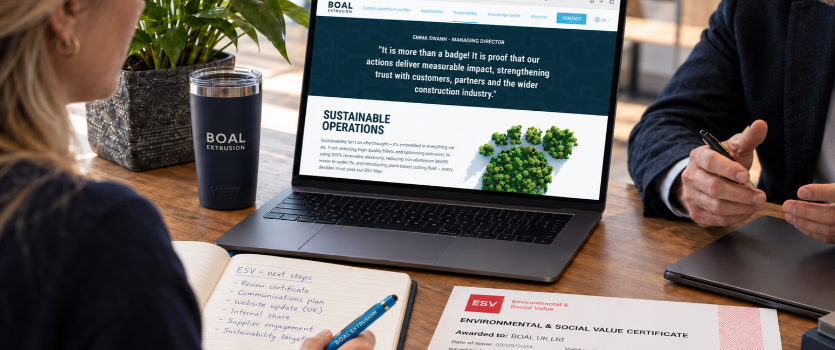
ESV Certification renewed
When BOAL Extrusion UK became one of the early adopters of the Environmental and Social Value (ESV) Certification, it was never simply about adding an...
Read more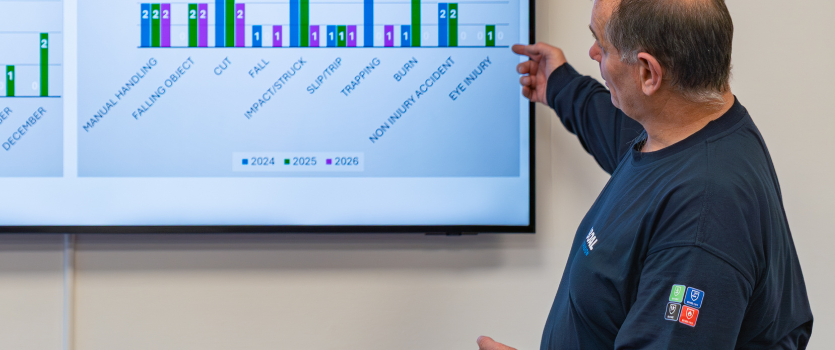
Health & Safety as part of responsible manufacturing
In manufacturing, Health and Safety is never just an internal matter. It affects people first, but its impact reaches far beyond the factory floor. A...
Read more
Why supply chain reliability is not an operational detail in specialist manufacturing
Recently, we received an urgent request from Caldwell Windows Ltd. Due to delays elsewhere in the supply chain, their planning came under pressure. Th...
Read more