

Stretcher jaws from 150 to 200 mm
More scope for customised aluminium profiles
An extra 50 mm of profile height may not sound like much. For an engineer, however, 33% more range can open up new design possibilities.
With a targeted upgrade to our existing stretching system, we are increasing the profile height range at BOAL Extrusion in De Lier from 150 to 200 mm. This allows us to make better use of the technical capabilities of our existing 8-inch extrusion press, without replacing the entire installation.
But the additional profile height is not the only benefit. The upgrade gives us even greater control over the stretching process, helps us reduce material loss further and allows us to produce more profiles locally in De Lier.
For our customers, that means greater technical freedom in profile design, a reliable production process and more opportunities to organise production closer to the market.

More freedom to design
For us, a good aluminium profile does not start at the extrusion press. It starts with what the profile needs to do.
What loads will it need to withstand? How will it be assembled? Where is material genuinely needed? And where could the design perhaps be made smarter or lighter?
That is why we prefer to work with customers while a profile is still an idea or an initial design. By considering geometry, alloy, wall thicknesses, tolerances and production capabilities at an early stage, we can work together to find the right balance: light where possible, strong where needed and reliably manufacturable. That last point matters. After all, a well-engineered profile still needs to be produced reliably.
The stretcher upgrade increases that technical freedom. Previously, we could process profiles up to a maximum height of 150 mm after extrusion; we can now process profiles up to 200 mm. This allows us to make better use of the available capabilities of our 8-inch extrusion press. For engineers, it means that production constraints are less likely to become the determining factor when developing the most suitable profile geometry.
The additional 33% also covers a profile height range for which there is clear customer demand, while increasing the possibilities for customised profiles in sectors including horticulture, solar, transport, building and construction, and electrical engineering.
What actually happens during stretching?
After a profile has been extruded and cooled on the cooling table, it is stretched before moving on to the next stage of production.
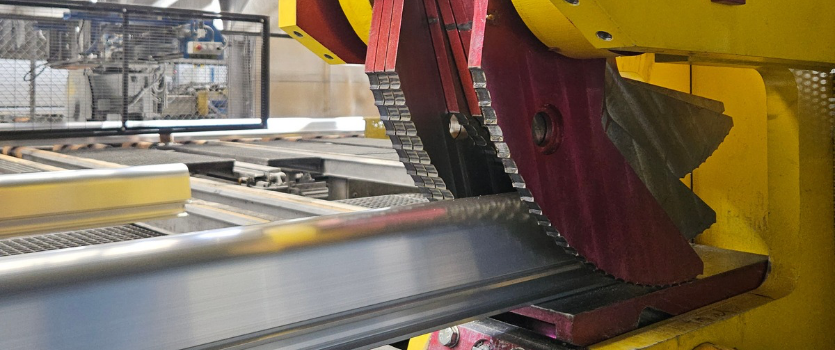
The system consists of two parts: a fixed tail stretcher at the end of the cooling table and a movable head stretcher at the beginning. The profile is clamped at both ends and then placed under controlled tension to straighten it.
The upgrade not only allows us to process higher profiles, but also gives us even greater control over how the profile is clamped and stretched. The forces can be distributed more evenly across the profile, helping to reduce deformation further and providing a more stable starting point for the machining and assembly stages that follow.
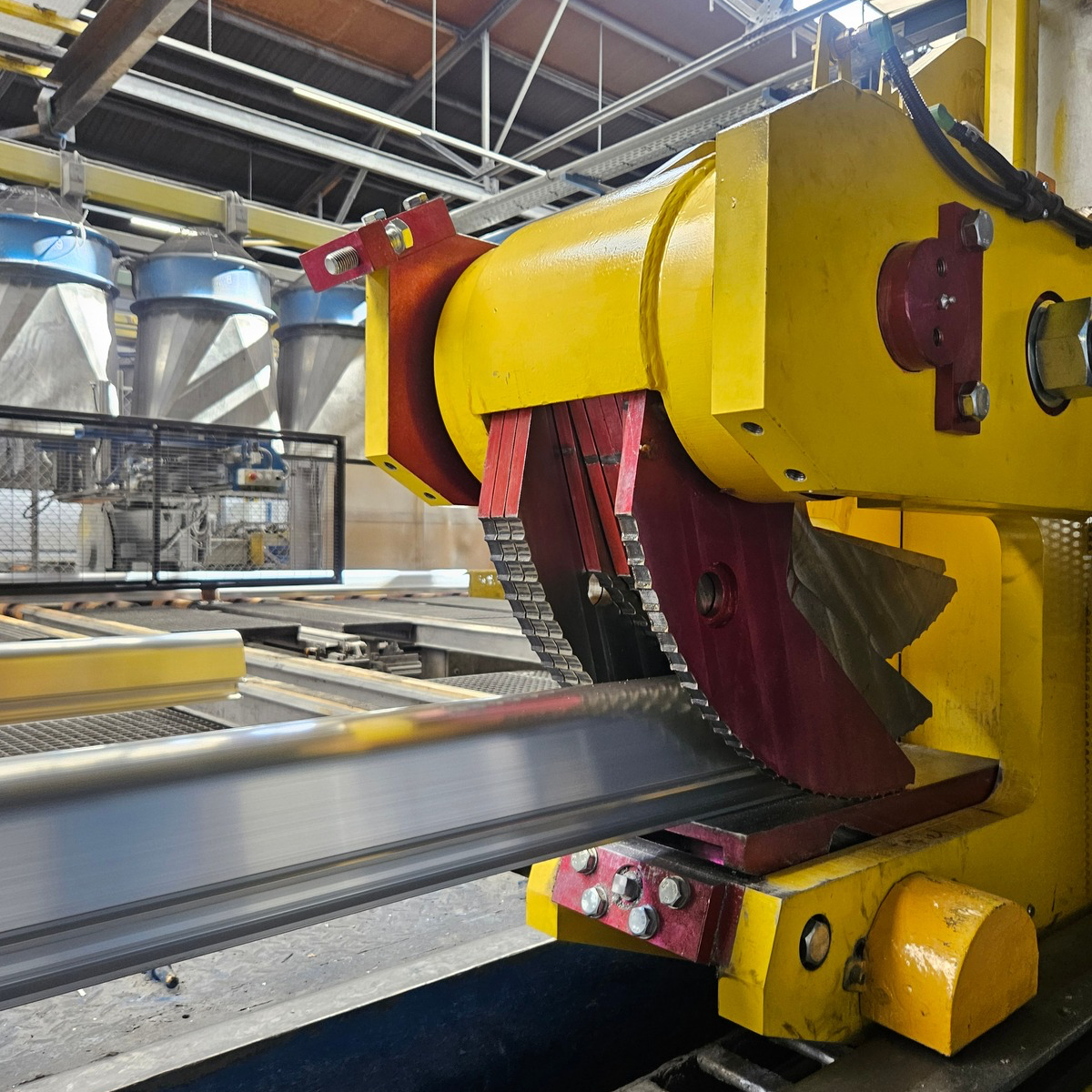
“With the upgraded stretcher jaws, we can control the stretching process more precisely. This helps us reduce deformation and stretch loss even further.”
Rob Ansems - Maintenance ManagerSmart material use does not stop at the drawing board
A great deal can already be achieved during the design stage. But if you put careful thought into using aluminium as efficiently and purposefully as possible within a profile, it makes sense to maintain that same approach throughout the production process. This is where the upgrade delivers another benefit.
“You can put a lot of thought into designing a profile that uses material efficiently, but you then want to avoid losing material unnecessarily during production,” explains Rob Ansems, Maintenance Manager at BOAL Extrusion. “With the upgraded stretcher jaws, we can stretch the profile in a more controlled way. This helps us reduce deformation and stretch loss even further. When the profile leaves this stage of the process in a more stable condition, it also provides a better starting point for the production steps that follow.”
Smart material use therefore runs through the entire process: from the first design decision to the moment the profile leaves the production line. Using aluminium where it is needed, while minimising unnecessary material use or loss wherever possible.
More local production
One clear benefit of the increased profile range can be seen in horticulture. We regularly produce aluminium profiles with greater profile heights for a number of customers.
Some of these profiles could not previously be processed entirely in De Lier because of the limitations of the existing stretching system and were therefore produced by our colleagues at BOAL Extrusion in Shepshed, UK.
With the upgrade, more of this production can now take place entirely in De Lier. This shortens the production chain and reduces transport between the two sites. At the same time, it frees up capacity in Shepshed for customised production for the UK market.
Robert Draisma, Managing Director of BOAL Extrusion Netherlands:
“Local4Local may sound straightforward, but it requires each production site to have the technical capability to fulfil that role. If a product for this market can be made in De Lier, that is where we want to produce it. And if that creates more capacity in Shepshed for local UK customers, we make better use of our capacity as a group while also avoiding unnecessary transport movements.”
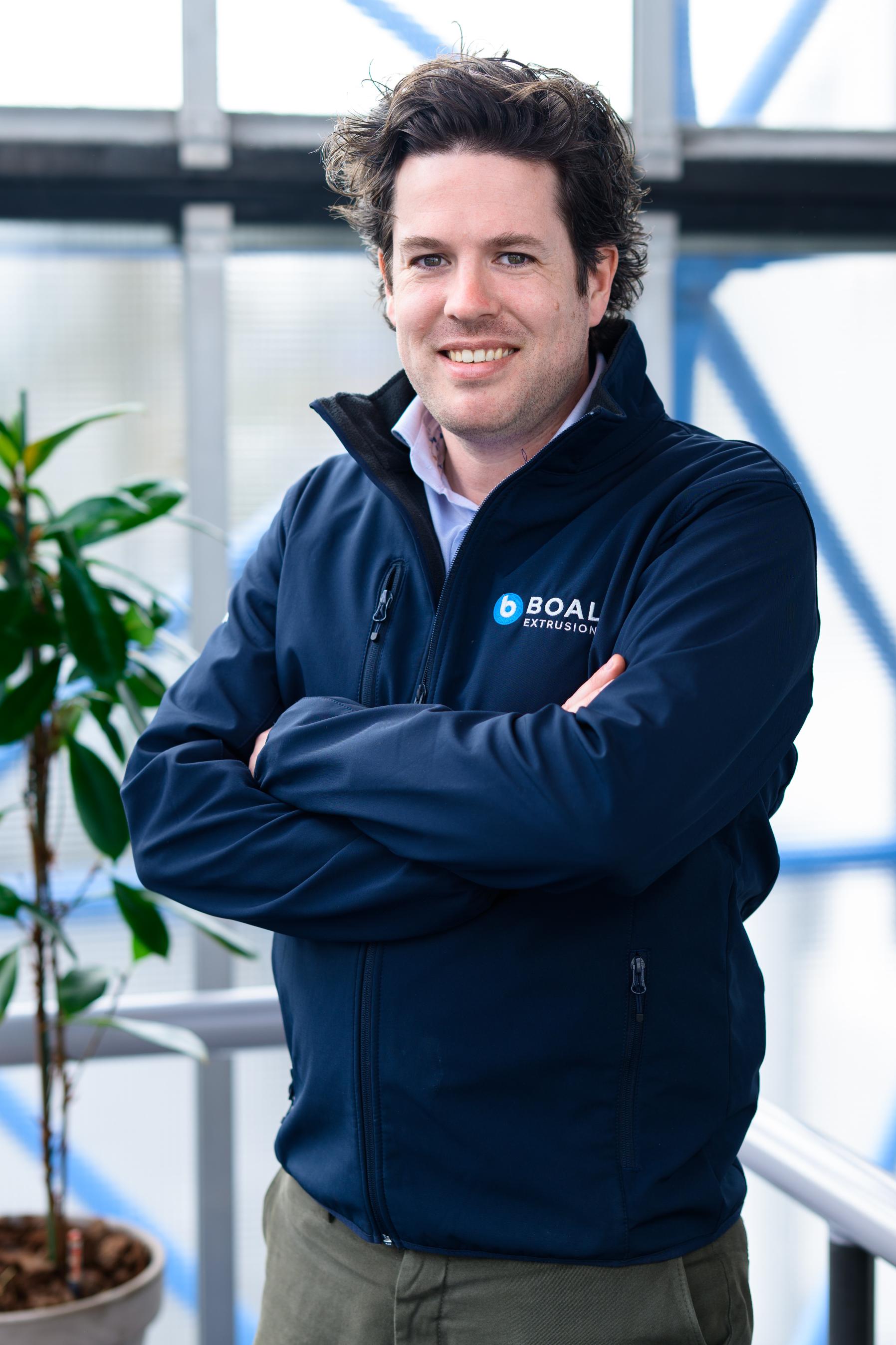
“The manufacturing industry faces the challenge of producing efficiently, flexibly and responsibly at the same time.”
Robert Draisma - Managing DirectorMore control with fewer manual steps
The stretching process has also been further automated. This reduces the number of manual operations required and allows the process to be carried out more consistently.
For customers, that translates into something very practical: a production process designed to be as stable as possible, supporting repeatable quality and continuity of production.
Safety and maintainability were considered from the outset. For the engineering and implementation of the upgrade, BOAL worked with Italian specialist SMF, which provides solutions for aluminium extrusion lines. The aim was to retain as much of the existing production set-up as possible, while making targeted improvements where they add technical value.
And the project moved quickly …
In week 9, the team began the initial assessment. By week 10, the CAPEX case was in place. The final design was approved in week 16, the upgraded components left Italy in week 32, and installation and integration in De Lier followed in week 33.
Less than six months after the first concrete plans, the upgraded stretching system was operational.
For Robert Draisma, the upgrade is above all an example of how BOAL intends to continue developing its production step by step:
“The manufacturing industry faces the challenge of producing efficiently, flexibly and responsibly at the same time. That cannot be achieved in one big step. It comes from continuing to invest in technology, people and processes that deliver demonstrable improvements. More possibilities for our customers, less waste and a production organisation that is better prepared for what the market will demand tomorrow. That is what we want to keep building on.”
Read more
Why aluminium matters in the next phase of European solar
The European solar industry is maturing. For years, the sector was assessed mainly on its contribution to clean energy. Today, however, there is also...
Read more
Geopolitical tensions put pressure on the aluminium market
Recent escalations in the Middle East are beginning to have a tangible impact on the global aluminium market. What is unfolding at a geopolitical leve...
Read more
BOAL Extrusion re-certified for ISO 9001
BOAL Extrusion NL has successfully renewed its ISO 9001 certification. This confirms that our quality processes comply with the international standard...
Read more