


aluminium 6000 series
Versatile alloys for the construction sector
In the construction industry, aluminium is no longer an alternative but a fully-fledged building material. The 6000 series alloys, including EN AW 6060 T66 and EN AW 6063 T66, are widely used thanks to their unique combination of strength, formability and corrosion resistance. These alloys are particularly well-suited to extrusion, making them highly versatile for architectural and structural applications.

What characterises the 6000 series?
The 6000 series consists of aluminium alloys with magnesium and silicon as the principal alloying elements. This combination provides:
Strong mechanical properties: suitable for load-bearing applications and structural elements.
Excellent extrusion behaviour: complex shapes and thin wall sections can be achieved with ease.
High corrosion resistance: ideal for outdoor use and humid environments.
Good weldability and machinability: suitable for post-processing and assembly.
Compatibility with thermal and surface treatments: anodising and powder coating can be readily applied.
Applications in construction
Thanks to modern extrusion techniques, aluminium from the 6000 series can be easily formed, even into complex profiles with integrated functions such as customised cable ducts, click connections or assembly chambers. This increases design freedom and speeds up construction. As a result, 6000 series alloys are widely used in:
Façade systems: profiles for frames, curtain walls and sun shading.
Modular constructions: frames for charging stations, technical housings and prefabricated elements.
Infrastructure: bridge components, rail structures and lighting columns.
Interior construction: profiles for partition walls, staircases and balustrades.
Sustainability and circularity
Aluminium from the 6000 series is not only technically versatile but also environmentally responsible. The material is fully recyclable without loss of quality, making it particularly suitable for circular applications. Its low weight also makes aluminium ideal for transport and manual installation - a practical advantage that is immediately noticeable.
When produced from recycled-content billets or billets manufactured using renewable energy, such as our BLUE by BOAL line, it fully meets the requirements of EPD-compliant applications. This aligns with certification systems such as BREEAM, LEED and the Dutch National Environmental Database (NMD). Combined with thoughtful design and smart processing, aluminium demonstrably contributes to CO₂ reduction and a future-oriented construction practice.

Challenge us!
Looking for the right alloy for your application? We’ll help you make the best choice.
Read more
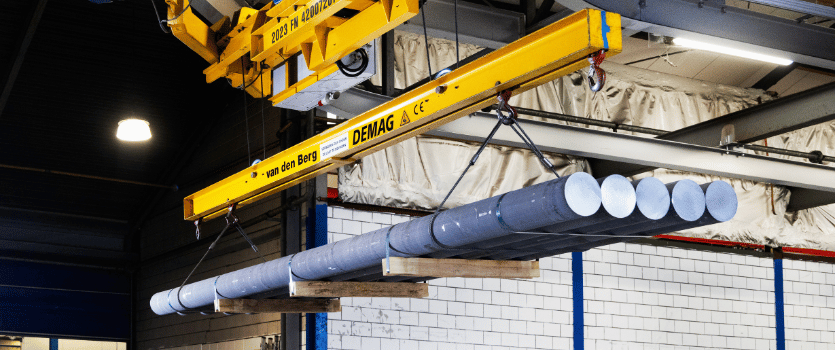
Progress requires measurable aluminium choices
Aluminium is a material of progress. It is lightweight, strong, formable, durable and fully recyclable. In sectors such as solar, transport, electrica...
Read more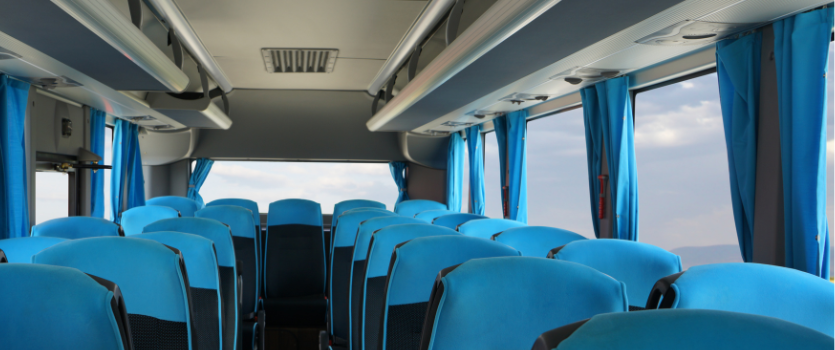
Build lighter, go further
In the transition towards sustainable mobility, efficiency is everything. Whether we are talking about electric vehicles or other low-emission applica...
Read more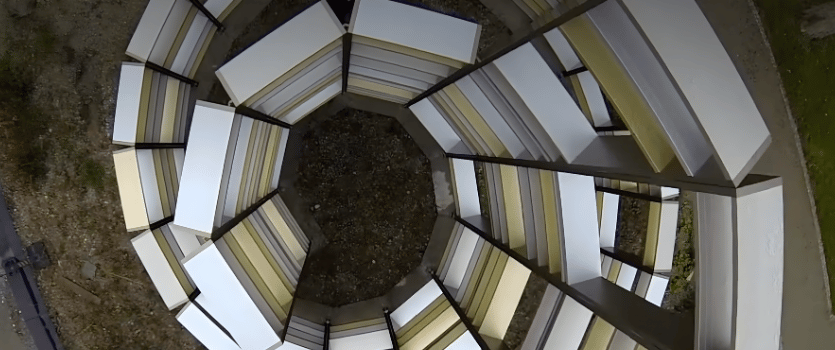
From profile to system
In many architectural and structural projects, manufacturability is still too often treated as a follow-up step to the design. A logical assumption, b...
Read more