

Progress requires measurable aluminium choices
Why European customers are looking for more control over materials, sustainability and supply chains
Aluminium is a material of progress. It is lightweight, strong, formable, durable and fully recyclable. In sectors such as solar, transport, electrical engineering, horticulture and building and construction, aluminium helps enable lighter, more efficient and more future-ready production.
But the context in which aluminium is sourced and applied is changing rapidly. Global uncertainty, fluctuating raw material prices, energy costs, geopolitical tensions and evolving regulations are making aluminium extrusion increasingly strategic. For customers in the Netherlands, Germany, France, Belgium and the wider European market, it is no longer only about a profile that meets the technical requirements.
The more important question is: how do we maintain control over availability, quality, CO₂e impact, compliance and repeatability in a market that has become less predictable?
This is where we, as BOAL Extrusion NL, want to add value. Not by removing uncertainty, no responsible supplier can do that, but by helping customers make better choices within that uncertainty. With technical knowledge, reliable communication, measurable sustainability data and aluminium solutions that meet the requirements of today and tomorrow.

From material choice to supply chain choice
In a stable market, aluminium purchasing can seem straightforward: specification, price, lead time, order. But that way of looking at it has become too narrow. Aluminium is energy-intensive, internationally traded and sensitive to disruptions in raw materials, transport and production capacity.
That is why the focus is shifting. Customers are not only looking for the right profile, but for a supply chain that remains manageable when circumstances change. Also when repeat orders, new volumes, changing customer requirements or stricter reporting obligations come into play.
This makes aluminium extrusion more than a production step. It is a link in manufacturability, scalability, supply reliability and demonstrable sustainability.
For us, this means that technical performance and sustainability cannot be viewed separately. A profile must perform functionally, be reproducible in production and be supported by the data customers increasingly need.
Sustainability needs to be substantiated
In Europe, sustainability is no longer only an ambition. It is increasingly becoming a condition for doing business. Customers need to be able to explain their choices to clients, supply chain partners, sustainability reports and tender processes.
That is why measurability is essential. CO₂e impact, recycled content, low-carbon aluminium, EPDs and CBAM information make material choice more concrete. They help customers not only say that a choice is more sustainable, but also show why.
With BLUE, we make that choice more tangible. BLUE Recycled Content works with aluminium billets containing at least 65% recycled material, consisting of both pre- and post-consumer scrap. BLUE Low Carbon focuses on billets produced using renewable energy sources such as solar, wind and hydropower. The BOAL document also states that low-carbon aluminium can be offered at 4 kg CO₂e per kilogram of aluminium.
This is relevant for customers who want to reduce their CO₂e footprint without treating sustainability as a separate marketing claim. It is about choices that are demonstrable, discussable and applicable in practice.
In Europe, sustainability is no longer only an ambition. It is increasingly becoming a condition for doing business.
ESG as a practical way of working
ESG only has value when it becomes visible in everyday choices. In how we collaborate. How we design. How we deal with materials, safety, energy, waste streams and transparency.
For us, ESG is therefore not a separate chapter alongside aluminium extrusion. It influences the way we help customers make better material choices. Think of recycled aluminium, low-carbon options, energy-efficient processes, safe working conditions, reliable data and awareness of the impact of our activities within the supply chain.
CBAM makes this movement even more concrete. Because aluminium falls within the scope of the regulation, accurate data, transparency and carbon reporting are becoming increasingly important. Customers want to know where they stand. Not afterwards, but at the moment choices are being made.
EPDs also play an important role, especially in sectors where environmental performance needs to be substantiated across the full life cycle. They help make the impact of aluminium profiles visible not only from a technical perspective, but also from an environmental one.
Progress requires control
The European market remains uncertain. That calls for realism. Not grand promises that everything will always be predictable, but a way of working that helps customers maintain control.
Control over material choice.
Control over CO₂e impact.
Control over quality and repeatability.
Control over regulation and reporting.
Control over what can actually be influenced.
That is what progress in aluminium extrusion means to us. Not simply producing faster or producing more, but producing smarter. With profiles that perform technically, can be substantiated more sustainably and fit within a European market in which transparency is becoming increasingly important.
Progress does not only require aluminium. It requires aluminium choices you can explain.
Read more
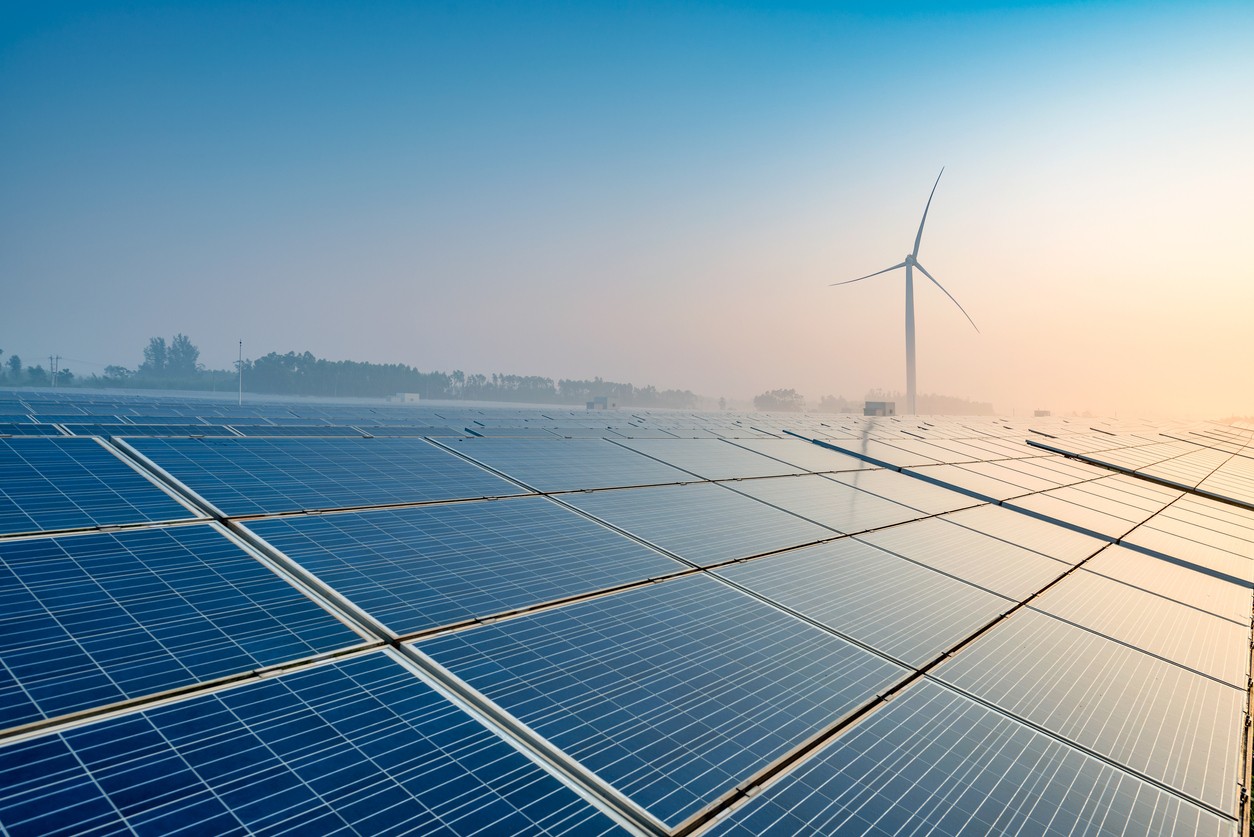
Why aluminium matters in the next phase of European solar
The European solar industry is maturing. For years, the sector was assessed mainly on its contribution to clean energy. Today, however, there is also...
Read more
Build lighter, go further
In the transition towards sustainable mobility, efficiency is everything. Whether we are talking about electric vehicles or other low-emission applica...
Read more
From profile to system
In many architectural and structural projects, manufacturability is still too often treated as a follow-up step to the design. A logical assumption, b...
Read more