

A sustainable aluminium profile
Starts with more than using less material
When looking to make an aluminium profile more sustainable, weight and material consumption are often the first considerations. After all, using less aluminium means less material, lower weight and potentially a reduced environmental impact. However, the reality is not always that straightforward.
A profile that has been extensively optimised for weight may introduce additional complexity elsewhere in the production chain. This could mean more demanding extrusion processes, a higher risk of rejects, additional machining operations, more complex assembly or tighter tolerance requirements.
Truly sustainable design therefore requires a broader perspective. It is not just about how much aluminium is used, but how material selection, functionality, manufacturability, machining, assembly and service life work together.

Sustainability starts with function
An aluminium profile rarely stands on its own. It forms part of a larger system, product or structure, where it needs to fulfil a specific function.
The profile may need to withstand loads, connect to other components, undergo further machining or form part of an assembly. That is why good profile design starts not with the cross-section, but with the application.
Which sections actually carry loads? Where are tolerances critical? Where can material be used more efficiently? Which geometry supports the required function without introducing unnecessary complexity? It is precisely at this early stage that opportunities arise to optimise both technical performance and sustainability.
Less material is not automatically better
Reducing material use can be beneficial, provided it is appropriate for both the application and the production process.
Thinner walls, for example, can reduce weight but may also place greater demands on extrusion, straightness or subsequent machining. The same applies to tolerances. A very tight tolerance may be essential at a critical connection point, while that same level of precision may offer little functional value elsewhere in the profile.
Optimisation therefore does not mean using as little material as possible everywhere. It means using material where it is functionally required and avoiding it where it adds no value. This approach makes better technical sense and can also contribute to more efficient use of raw materials.
Manufacturable does not automatically mean repeatable
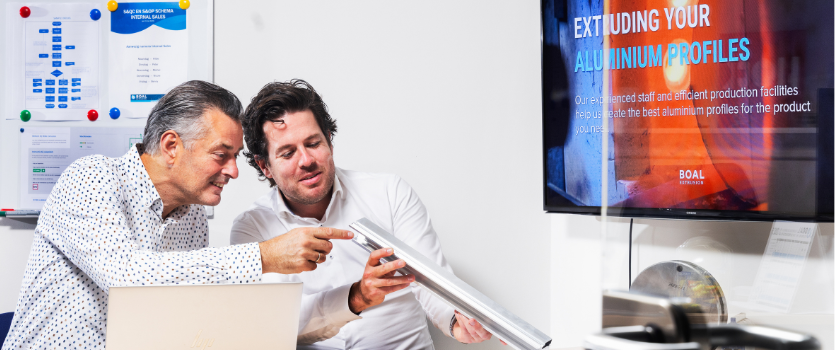
For series production, another important question arises: can a profile not only be manufactured, but also consistently produced to the agreed specifications? This distinction matters.
Geometry, wall thicknesses, alloy selection, heat treatment, profile dimensions and tolerances all influence one another. A profile may be technically possible to extrude, yet prove difficult to produce consistently in practice if certain design choices make the process too demanding.
This can lead to additional corrections, further machining or higher rejection rates. This is where sustainability and production efficiency are directly connected. A stable, repeatable production process helps prevent unnecessary material waste and additional production steps.
Die design is a critical turning point
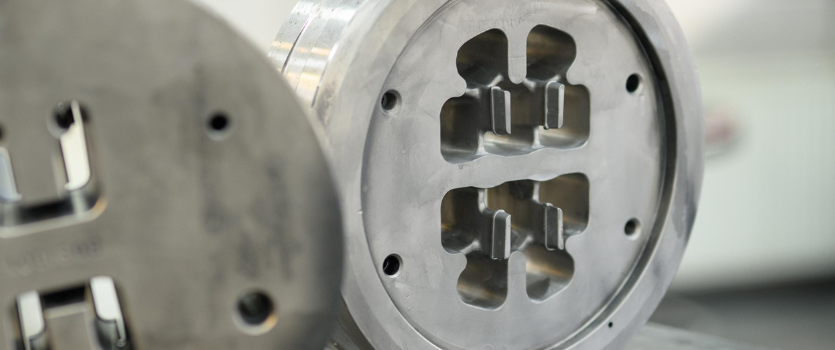
In aluminium extrusion, the die is where many design decisions are translated into a physical tool. During die development, the focus is not only on achieving the required shape, but also on material flow and maintaining control over the extrusion process. This is why the stage before die development is so important.
When a design is only assessed once most decisions have already been finalised, opportunities for optimisation can become more difficult to implement. Other components may already have been designed around the existing geometry, connection points may be fixed and assembly processes may already have been established.
Early technical collaboration can make a real difference. Not because the extrusion partner takes over the design, but because knowledge of the application is combined with expertise in extrusion, die development and downstream processes.
For procurement, there is more to consider than the price per kilogram
The same broader perspective is relevant to procurement professionals. After all, the lowest price per kilogram of aluminium does not automatically result in the lowest cost for the finished product.
A slightly different profile geometry, for example, could eliminate the need for a separate component, simplify a machining operation or reduce assembly time. Conversely, extensive weight optimisation may lead to more complex production processes or tighter requirements for tolerances and machining.
This is why it makes sense to look beyond the price of the profile or raw material and consider the total cost across the value chain. Material, extrusion, machining, surface finishing, assembly, logistics and service life are all interconnected. Focusing on just one element may mean overlooking opportunities for optimisation elsewhere in the process.
Sustainability extends beyond the extrusion press
The environmental impact of an aluminium profile is not determined solely by aluminium production. Extrusion is often followed by operations such as cutting, milling, drilling, anodising or powder coating. Packaging, transport and assembly come next. Smart profile design can make a difference at these later stages too.
Combining functions within a single profile can reduce the number of components required. Simplifying machining operations can reduce production time, while a more stable production process can help minimise rejects and material waste.
Material selection also plays an important role. Using recycled and low-carbon aluminium can reduce a profile's carbon footprint, expressed in CO₂e. However, design decisions still determine how much material is ultimately needed and how many processing steps are required.
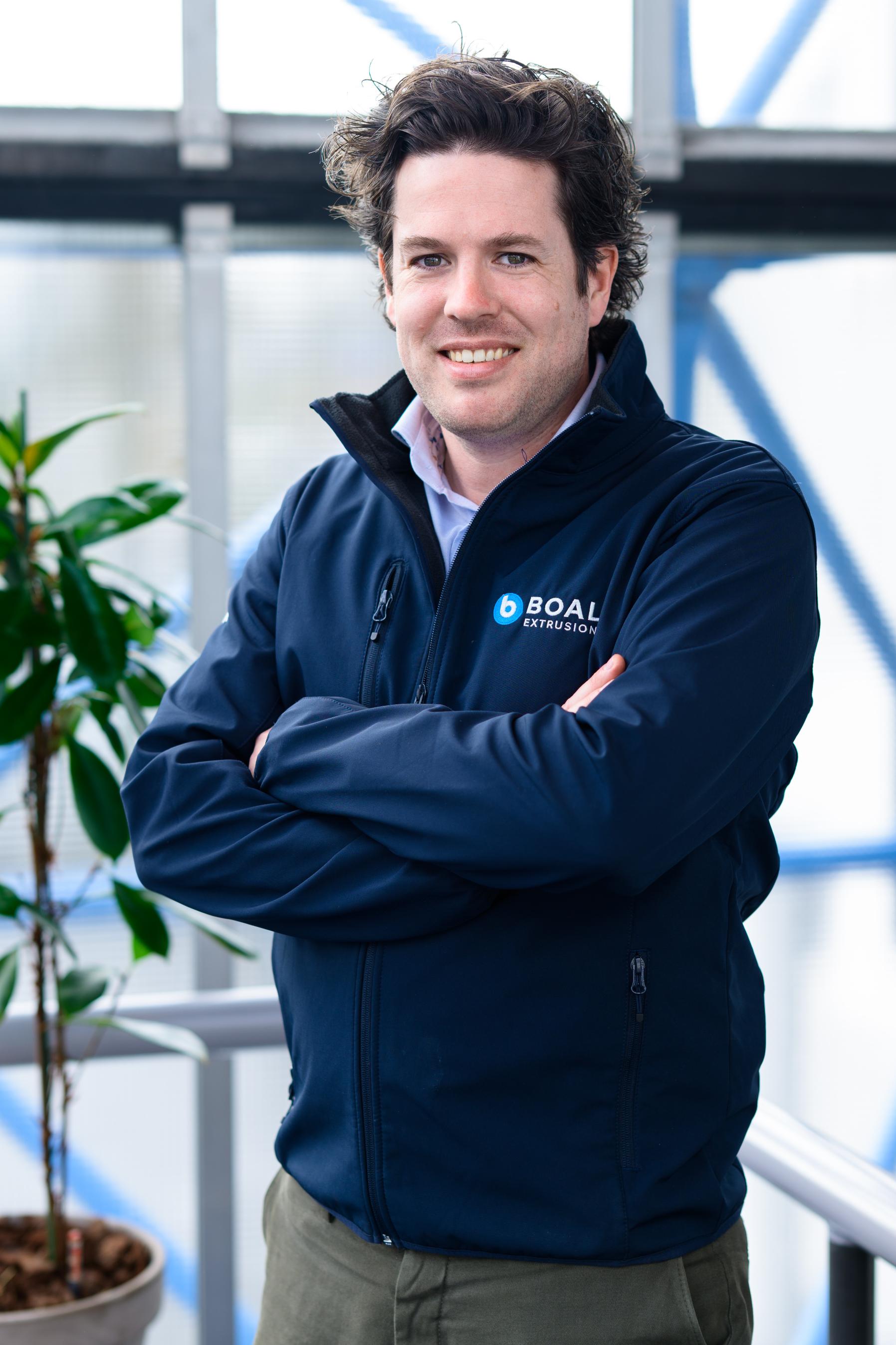
“The greatest benefits come from considering function, material use, production and downstream processes as a whole.”
Robert Draisma - Managing DirectorSustainability belongs at the same table as engineering and procurement
At BOAL Extrusion NL, we believe the best opportunities for optimisation arise when engineering, procurement and production are involved early in the process.
Engineers focus on function and performance, procurement professionals on costs and security of supply, and production teams on manufacturability and repeatability. Bringing these perspectives together helps create a profile that meets technical requirements, can be produced efficiently and uses material where it is genuinely needed.
“A sustainable profile is not necessarily the lightest profile,” says Robert Draisma, Managing Director of BOAL Extrusion NL. “The greatest benefits come from considering function, material use, production and downstream processes as a whole.”
The best opportunities for optimisation begin before die development
A sustainable aluminium profile does not simply start with the decision to use recycled or low-carbon aluminium. The foundations are laid much earlier.
It starts with understanding what the profile needs to do, which tolerances are genuinely necessary, where material adds value, how consistently the profile can be produced and how the design affects machining, assembly and service life.
Making these decisions early increases the likelihood of creating a profile that not only meets technical requirements, but also makes more efficient use of materials, energy and production capacity.
This is where engineering, procurement and sustainability come together.
Read more
A consistent approach to leadership
Good leadership starts with understanding what people need. Particularly in a manufacturing environment, where employees with different backgrounds, e...
Read more
In a greenhouse, everything is interconnected.
A few grams less aluminium per metre. An additional drainage channel. A critical tolerance that must be maintained over several metres. A connection t...
Read more
More design freedom for custom aluminium profiles
An extra 50 mm in profile height may not sound like much. But for an engineer, an increase of over 30% can open up new design possibilities.
Read more